
 Email: Furniture98@163.com jane@sunwayfurniture.com WhatsApp: +8613928293098

Teak vs Aluminum Sun Lounger: Which Is Best for Hotels and Poolside Projects?

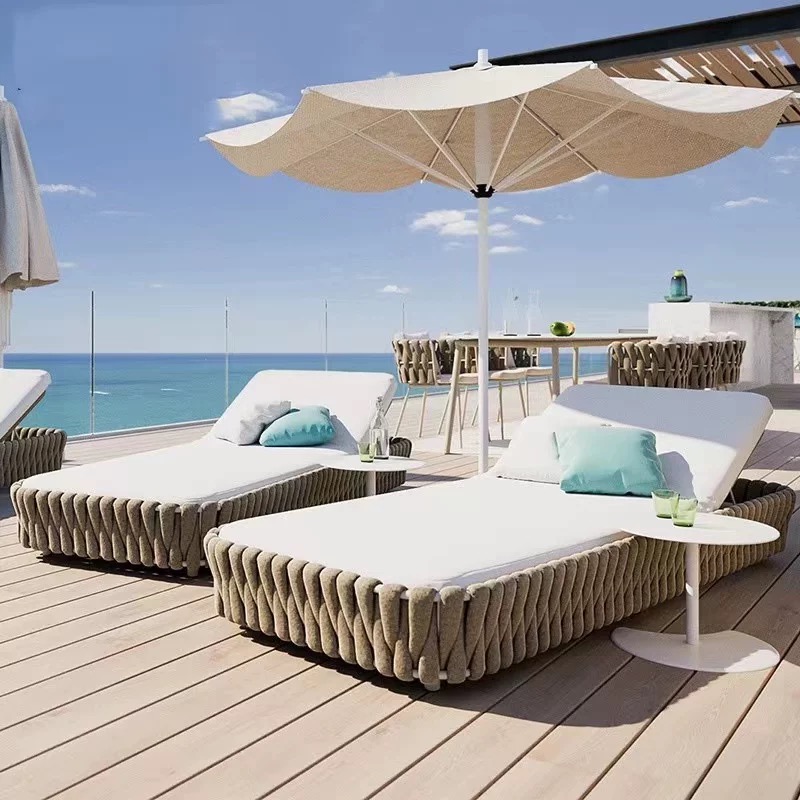
Choosing the right sun lounger is an important decision for hotels, luxury resorts, private villas, swimming pools, and landscaped gardens. The right outdoor furniture should combine attractive design, guest comfort, durability, and practical maintenance.
When comparing outdoor sun loungers, two popular frame materials are teak wood and aluminum. Both can work well in outdoor environments, but they offer different advantages in appearance, weight, maintenance, and overall project requirements.
So, which is better: a teak sun lounger or an aluminum sun lounger?
In this guide, we compare teak vs aluminum sun loungers to help hotel procurement managers, villa developers, poolside furniture buyers, and garden designers choose the right option for their projects.
1. What Is the Difference Between Teak and Aluminum Sun Loungers?
Teak and aluminum sun loungers differ primarily in their frame material, appearance, maintenance requirements, and handling characteristics.
Teak sun loungers feature natural hardwood with distinctive grain patterns and warm tones. They are often chosen for luxury resorts, landscaped gardens, and outdoor spaces where natural materials are an important part of the design.
Aluminum sun loungers use metal frames that are relatively lightweight and naturally resistant to rust. They are commonly considered for contemporary hotels, swimming pools, rooftop terraces, and commercial outdoor furniture projects.
The best choice depends on your design concept, climate, maintenance plan, budget, and expected usage.
For hospitality projects, it is important to evaluate the complete product rather than choosing a lounger based on frame material alone. Fabric quality, reclining mechanisms, construction, finish, and overall workmanship also influence performance.
2. Teak vs Aluminum Sun Lounger: A Quick Comparison
| Comparison factor | Teak sun lounger | Aluminum sun lounger |
|---|---|---|
| Appearance | Natural grain and warm wood tones | Clean, modern, and versatile |
| Weight | Generally heavier | Generally lighter |
| Maintenance | May require periodic cleaning and optional oiling, depending on the desired appearance | Usually requires routine cleaning and occasional frame inspection |
| Weather performance | Naturally durable when suitable teak and proper construction are used | Good outdoor suitability when the alloy, finish, and hardware are appropriate |
| Design style | Natural, tropical, and resort-inspired | Contemporary, minimalist, and modern |
| Handling | Heavier to move | Often easier to reposition |
| Aging | Can weather to a silver-gray appearance | Finish appearance depends on coating quality and environmental exposure |
| Commercial applications | Luxury resorts, villas, gardens, and premium poolside areas | Hotels, swimming pools, resorts, and larger commercial projects |
Neither material is universally better. The right option depends on how the sun lounger will be used and the priorities of the project.
3. Teak Sun Loungers: Natural Beauty for Luxury Outdoor Spaces
Teak is a hardwood valued for its natural appearance and durability in outdoor furniture applications.
Its warm color and distinctive grain can complement tropical landscaping, natural stone, wooden decking, and luxury resort architecture.
Advantages of Teak Sun Loungers
Natural and premium appearance
Teak creates a warm, organic look that works well in luxury villas, boutique hotels, tropical resorts, and landscaped gardens.
For projects that emphasize natural materials and relaxed luxury, teak sun loungers can complement the surrounding architecture and landscape.
Natural durability
Teak contains natural oils and has properties that make it suitable for many outdoor applications. However, actual performance depends on the timber quality, construction, exposure conditions, and maintenance.
Distinctive aging characteristics
Unfinished teak can gradually develop a silver-gray patina when exposed to outdoor conditions. Some buyers appreciate this weathered appearance, while others prefer to preserve the original golden-brown color through suitable maintenance.
What Should Buyers Consider?
Teak sun loungers may require more attention to cleaning and appearance maintenance than some aluminum alternatives.
The timber can also be heavier to move, which may matter when hotel staff need to rearrange furniture frequently.
For buyers sourcing teak furniture, it is important to confirm the wood species, grade, moisture condition, construction quality, and any applicable sourcing or import documentation.
If timber legality or sustainability certification is important to the project, request appropriate supporting documents and verify their applicability.
Where Are Teak Sun Loungers Most Suitable?
Teak sun loungers can be a strong design choice for:
- Luxury resorts with natural landscaping.
- High-end villas with wooden decking.
- Boutique hotels with warm, organic design concepts.
- Premium garden and poolside environments.
- Hospitality projects where natural wood is a key design feature.
For these applications, teak offers a distinctive appearance that may be difficult to replicate with other materials.
4. Aluminum Sun Loungers: Practical for Modern Hotels and Pools
Aluminum is widely used in outdoor furniture because it is relatively lightweight and naturally resistant to rust.
With suitable surface finishing and construction, aluminum sun loungers can be used in many commercial outdoor environments, including swimming pools, hotel terraces, and resort relaxation areas.
Advantages of Aluminum Sun Loungers
Lightweight and easy to handle
Aluminum frames are generally easier to move than comparable solid hardwood frames. This can be useful for hotel teams that regularly rearrange poolside seating or prepare outdoor areas for different activities.
Contemporary design
Aluminum can support clean lines, slim profiles, and a wide range of modern furniture styles.
Depending on the supplier, buyers may be able to choose different frame finishes and coordinate the loungers with outdoor sofas, dining chairs, and tables.
Practical maintenance
Aluminum frames are generally straightforward to clean. Powder-coated finishes can provide additional surface protection, although coating quality, preparation, and exposure conditions affect long-term performance.
Routine cleaning and periodic inspections are still important.
Suitable for coordinated furniture collections
For hotels, resorts, and villa developments, aluminum sun loungers can be coordinated with matching outdoor sofas, dining furniture, and other seating products to create a consistent visual identity.
What Should Buyers Consider?
Not all aluminum sun loungers offer the same performance.
When comparing products, ask about the aluminum alloy, frame dimensions, structural joints, coating specifications, hardware, and recommended load capacity.
For coastal properties and poolside environments, pay particular attention to salt exposure, chlorine, cleaning chemicals, and the suitability of the finish and fasteners.
Aluminum can also become hot when exposed to direct sunlight, depending on the surface color, temperature, and exposure conditions. Cushion materials and product design should therefore be considered when selecting furniture for hot climates.
Where Are Aluminum Sun Loungers Most Suitable?
Aluminum sun loungers are often worth considering for:
- Hotel swimming pools.
- Large resorts and hospitality developments.
- Contemporary luxury villas.
- Rooftop terraces and modern outdoor lounges.
- Commercial poolside furniture projects.
- Buyers who prioritize easier handling and straightforward maintenance.
For projects requiring multiple loungers, aluminum may also be practical when furniture needs to be repositioned regularly.
5. Which Sun Lounger Is Better for Swimming Pools?
For poolside projects, the choice between teak and aluminum depends on the design concept, surrounding materials, climate, and maintenance requirements.
Choose Teak for a Natural Poolside Atmosphere
Teak sun loungers can complement timber decking, tropical gardens, natural stone, and resort landscaping.
They are particularly suitable when the design emphasizes natural textures and a premium outdoor atmosphere.
However, buyers should plan for timber cleaning, weathering, and any desired surface treatments.
Choose Aluminum for a Contemporary Poolside Design
Aluminum sun loungers work well with modern swimming pools, minimalist architecture, and coordinated outdoor furniture collections.
Their relatively low weight can also make them easier to reposition during daily hotel operations.
For poolside installations, confirm that the frame finish, fasteners, fabric, and other components are suitable for the actual environment.
What About Cushions and Fabric?
Frame material is only one part of the decision.
For poolside sun loungers, consider fabrics with appropriate UV resistance, colorfastness, and easy-clean properties. Water-repellent finishes may help with light moisture, but they do not necessarily make cushions waterproof.
If the loungers will be exposed to splashes, sunscreen, chlorine, and frequent cleaning, ask the supplier for material specifications and maintenance instructions.
6. Teak vs Aluminum: Which Is Easier to Maintain?
Maintenance is an important consideration for hotel operators, resort managers, and commercial furniture buyers.
The time and resources required to care for outdoor furniture can affect the total cost of ownership.
Teak Maintenance
Teak can be cleaned periodically to remove dirt and environmental deposits. If you prefer to retain its original warm color, suitable teak maintenance products may be used according to the manufacturer’s recommendations.
If the wood is allowed to weather naturally, its color can gradually change to silver-gray. This change does not automatically mean that the timber has failed.
Buyers should establish a consistent care routine based on the product finish and local conditions.
Aluminum Maintenance
Aluminum frames can usually be cleaned with mild soap, water, and a soft cloth, following the supplier’s instructions.
Inspect the coating, joints, fasteners, and reclining components periodically. Any damage to the surface finish should be addressed according to the manufacturer’s recommendations.
In coastal and poolside environments, regular cleaning can help remove accumulated salt or chemical residues.
Which Is More Practical for Hotels?
For properties with many sun loungers, maintenance planning should include cleaning frequency, staff handling, replacement components, and the desired appearance over time.
Aluminum may be more convenient when low-maintenance frames and easy repositioning are priorities.
Teak may be preferred when natural aesthetics are central to the guest experience and the property has a suitable timber maintenance plan.
The better option is the one that fits the hotel’s operational requirements rather than the one with the lowest initial maintenance burden alone.
7. Compare the Total Cost of Ownership, Not Just the Purchase Price
When sourcing sun loungers for hotels, resorts, or villa projects, the purchase price is only one part of the investment.
A more useful comparison includes the expected costs associated with maintenance, transportation, replacement components, and long-term use.
Consider the following factors:
- Initial product price.
- Material grade and construction quality.
- Cushion fabric and filling specifications.
- Cleaning and maintenance requirements.
- Transportation and packaging.
- Replacement parts and repair options.
- Expected service life under actual conditions.
- Availability of matching products for future orders.
Teak and aluminum products can each vary significantly in price depending on design, material quality, dimensions, and manufacturing specifications.
Instead of assuming that one material is always cheaper, request quotations for products with comparable dimensions, quality requirements, and intended applications.
For larger hospitality projects, comparing the complete specification and estimated operating costs can provide a more useful basis for purchasing decisions.
8. How to Choose the Right Sun Lounger for Your Project
Before making a final decision, consider these five steps.
Step 1: Define the Project Style
Identify whether your project calls for a natural resort atmosphere, a contemporary poolside design, or a coordinated luxury outdoor environment.
Step 2: Assess the Installation Environment
Consider direct sunlight, rainfall, humidity, salt exposure, pool chemicals, and whether the furniture will be covered or fully exposed.
Step 3: Establish Maintenance Requirements
Determine how frequently the furniture will be cleaned, whether staff need to move it regularly, and how its appearance should be maintained.
Step 4: Confirm Product Specifications
Request dimensions, material details, frame construction information, fabric specifications, load capacity, and care instructions.
For commercial projects, consider sample approval and appropriate quality inspection before placing a large order.
Step 5: Evaluate the Supplier
Look for clear communication, consistent product specifications, suitable packaging, realistic production schedules, and transparent commercial terms.
For multi-area projects, it may also be useful to source sun loungers alongside matching outdoor sofas and garden dining furniture.
9. Teak vs Aluminum Sun Lounger: Which One Should You Choose?
The right choice depends on your priorities.
Choose teak sun loungers if:
- You prefer natural wood grain and warm tones.
- Your project emphasizes tropical or organic design.
- You appreciate the natural weathering characteristics of timber.
- Your maintenance plan accommodates wood care.
Choose aluminum sun loungers if:
- You prefer a contemporary appearance.
- Lightweight furniture is important for daily operations.
- You want a frame that is generally straightforward to clean.
- Your project requires coordinated modern outdoor furniture.
For luxury hotels, villas, and resorts, both materials can be suitable when product quality, environmental exposure, and maintenance are properly considered.
There is no single best material for every project. The best sun lounger is the one that balances design, comfort, durability, maintenance, and budget for its intended use.
10. Explore Outdoor Furniture Options with Foshan Sunway Furniture Co. Ltd
Selecting the right sun lounger is one part of creating a comfortable and visually consistent outdoor environment.
Hotels, resorts, luxury villas, and garden projects may also require coordinated seating and dining furniture to complement their poolside and landscape designs.
At Foshan Sunway Furniture Co. Ltd, our product range includes:
- Sun Loungers for swimming pools, resorts, hotels, and outdoor relaxation areas.
- Outdoor Sofas for hotel terraces, villa patios, and resort lounges.
- Garden Dining Chairs and Tables for outdoor restaurants, gardens, and hospitality spaces.
- Swing Chairs for villas, landscaped gardens, and leisure areas.
We welcome inquiries from hotel procurement teams, luxury villa developers, poolside furniture buyers, garden designers, furniture wholesalers, and other B2B customers.
When contacting us, please share your project type, estimated quantity, preferred design, material requirements, destination, and target delivery schedule.
This information can help us better understand your requirements and discuss suitable outdoor furniture options for your project.
Frequently Asked Questions
Is teak or aluminum better for sun loungers?
Teak is often selected for its natural wood appearance, while aluminum is commonly chosen for its lighter weight and contemporary design. The better choice depends on your environment, maintenance requirements, aesthetic preferences, and budget.
Are aluminum sun loungers suitable for hotels?
Aluminum sun loungers can be suitable for hotels when the frame construction, surface finish, hardware, and other components meet the project’s requirements. Buyers should confirm product specifications and suitability for the intended environment.
Are teak sun loungers suitable for swimming pools?
Teak sun loungers can be used in poolside environments when the timber, construction, and maintenance plan are appropriate. Buyers should consider moisture exposure, cleaning, surface weathering, and the surrounding installation conditions.
Do aluminum sun loungers rust?
Aluminum does not develop rust in the same way as iron-based metals, but its surface and the furniture’s other metal components can still deteriorate under unsuitable conditions. Coatings, fasteners, and maintenance are important, especially in coastal and poolside environments.
Does teak outdoor furniture require maintenance?
Yes. Teak should be cleaned periodically. Buyers who want to preserve its original color may choose appropriate maintenance treatments, while untreated teak can weather toward a silver-gray appearance.
What should I consider when buying commercial sun loungers in bulk?
Compare material specifications, dimensions, structural construction, reclining mechanisms, fabric performance, packaging, production schedules, warranty terms, and replacement-part availability. For large projects, consider approving a sample and arranging a pre-shipment inspection.
Can I coordinate sun loungers with other outdoor furniture?
Yes, coordinated furniture collections can help create a consistent design across hotel pools, terraces, gardens, and outdoor dining areas. Ask suppliers about matching outdoor sofas, dining chairs, tables, and swing chairs.
Final Thoughts
When comparing teak vs aluminum sun loungers, consider more than appearance or initial purchase price. Material performance, maintenance requirements, environmental exposure, guest comfort, and the needs of the project all influence the final decision.
Teak can bring natural warmth to luxury resorts and villa gardens, while aluminum can provide a practical option for contemporary hotels and poolside environments.
By comparing product specifications and evaluating the complete cost of ownership, buyers can select sun loungers that suit their outdoor spaces and operational requirements.